Handwork Sarees Explained: Types of Embroidery Used in Indian Sarees (Complete Guide) | Neelghar Blog
•Neelghar
Handwork Sarees Explained: Types of Embroidery Used in Indian Sarees (Complete Guide)
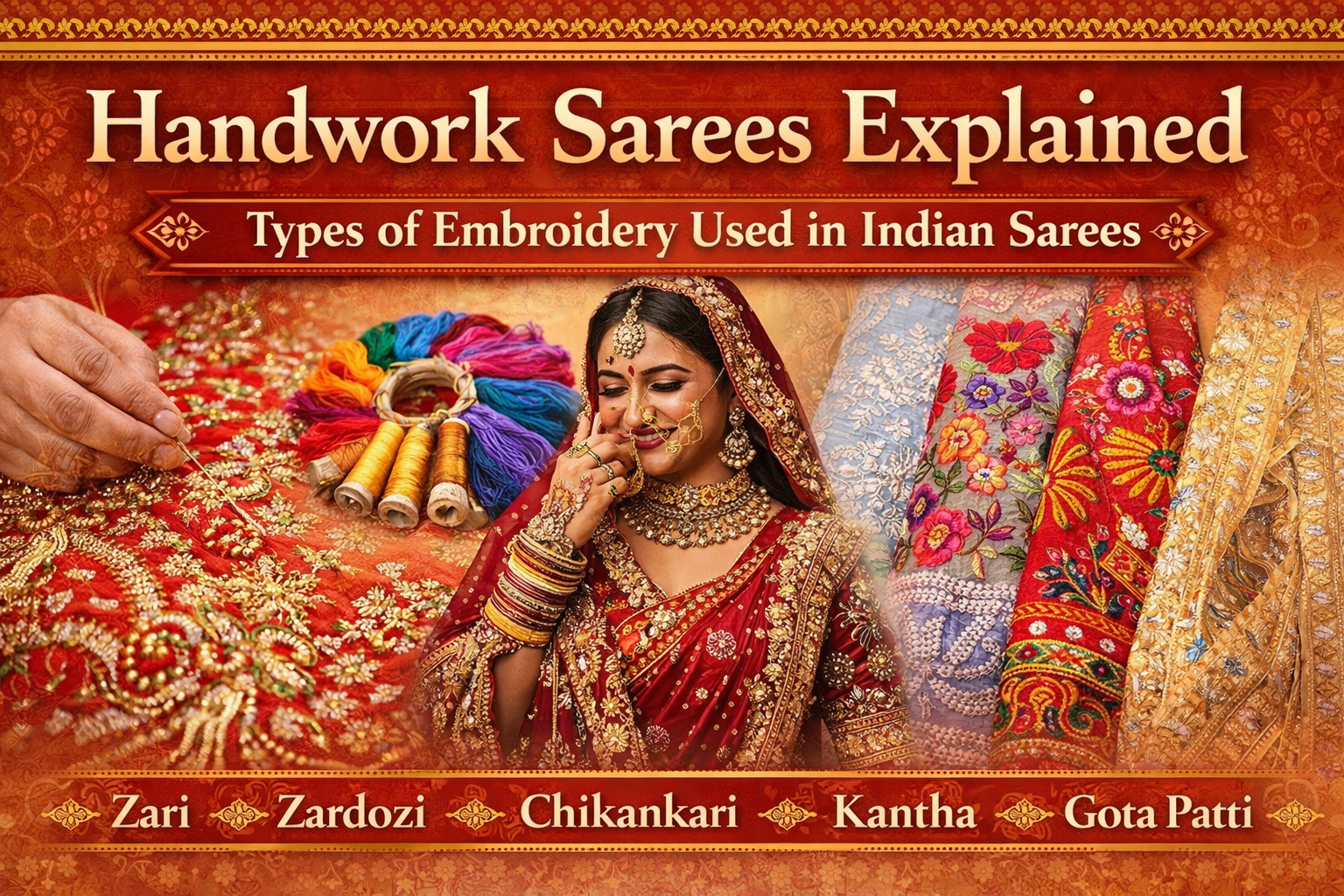
Discover the beauty of handwork sarees and explore the different types of embroidery used in Indian sarees, from Zari and Zardozi to Chikankari, Kantha, and Gota Patti. This detailed guide highlights regional embroidery styles, cultural significance, fabrics, and how to identify authentic handcrafted sarees—perfect for weddings, festivals, and timeless heirloom fashion.
India’s textile heritage is globally admired for its craftsmanship, detailing, and timeless beauty. Among the most treasured garments in Indian fashion is the handwork saree—a masterpiece created with intricate embroidery, skilled artistry, and centuries-old techniques.
In this detailed guide, we explore what handwork sarees are, the different types of embroidery used in Indian sarees, their regional origins, cultural importance, and why they remain a luxury fashion statement today.
What Are Handwork Sarees?
Handwork sarees are traditional Indian sarees decorated with handcrafted embroidery, embellishments, and needlework instead of machine-made designs. Skilled artisans spend days, weeks, or even months creating detailed patterns using threads, beads, mirrors, sequins, zari, and other decorative materials.
Unlike printed or machine-embroidered sarees, hand-embroidered sarees carry a unique human touch—making each piece exclusive and valuable.
Why Hand Embroidery in Sarees Is Special
100% handcrafted detailing
Unique patterns (no two sarees are identical)
Cultural and regional identity
High durability when preserved properly
Considered luxury and heirloom fashion
Handwork sarees are often worn for weddings, festivals, and grand celebrations.
Types of Embroidery Used in Indian Sarees
India is home to diverse embroidery styles, each reflecting regional culture and tradition.
1. Zari Work Sarees
Zari embroidery involves weaving fine gold or silver metallic threads into the fabric.
Origin:
Popular in Gujarat and Varanasi
Features:
Royal and luxurious appearance
Intricate floral and paisley motifs
Often seen in bridal sarees
Zari is heavily used in Banarasi sarees and wedding collections.
2. Zardozi Work Sarees
Zardozi is a rich and heavy form of metallic embroidery.
Origin:
Flourished under Mughal patronage in Lucknow
Materials Used:
Gold and silver threads
Pearls
Beads
Stones
Zardozi sarees are perfect for bridal wear due to their grandeur and heavy embellishment.
3. Chikankari Sarees
Chikankari is delicate and elegant white thread embroidery.
Origin:
Associated with Lucknow
Characteristics:
Floral patterns
Shadow work
Lightweight and breathable fabric
Chikankari sarees are ideal for summer weddings and festive occasions.
4. Kantha Work Sarees
Kantha embroidery uses a simple running stitch to create beautiful motifs.
Origin:
Traditional to West Bengal
Designs Include:
Folk stories
Animals and birds
Geometric patterns
Kantha sarees are eco-friendly and often made on soft cotton or silk.
5. Kutch Embroidery Sarees
Kutch embroidery is vibrant and mirror-rich handwork.
Origin:
From the Kutch region of Gujarat
Highlights:
Bright colors
Mirror work (Shisha embroidery)
Bold tribal motifs
These sarees are commonly worn during Navratri and festive celebrations.
6. Phulkari Sarees
Phulkari means “flower work.”
Origin:
Traditional embroidery of Punjab
Features:
Bright silk threads
Dense floral patterns
Vibrant base fabrics
Phulkari sarees are popular for weddings and cultural events.
7. Kashmiri Embroidery (Sozni & Aari Work)
Kashmiri embroidery is known for its fine needlework and intricate detailing.
Origin:
From Jammu and Kashmir
Styles:
Sozni (fine needle embroidery)
Aari (hook embroidery)
Common motifs include paisleys, chinar leaves, and floral vines.
8. Mirror Work Sarees
Mirror work, also known as Shisha embroidery, involves attaching small mirrors to fabric.
Popular In:
Rajasthan and Gujarat
These sarees reflect light beautifully and are ideal for festive occasions.
9. Resham Embroidery Sarees
Resham embroidery uses colored silk threads to create smooth and glossy designs.
Key Features:
Soft finish
Floral and paisley motifs
Elegant and subtle look
Resham work sarees are widely used for formal events.
10. Gota Patti Sarees
Gota Patti involves applique work using gold or silver ribbon.
Origin:
Highly popular in Rajasthan
Characteristics:
Royal appearance
Lightweight compared to heavy zari
Common in bridal wear
Gota Patti sarees are essential in Rajasthani wedding trousseaus.
Fabrics Used in Handwork Sarees
Hand embroidery is done on various fabrics:
Silk
Cotton
Georgette
Chiffon
Organza
Velvet
The fabric selection depends on the type of embroidery and occasion.
Cultural Importance of Handwork Sarees
Handwork sarees are not just garments—they symbolize:
Heritage and tradition
Regional identity
Family heirlooms
Bridal elegance
Festival celebrations
Many hand-embroidered sarees are passed down through generations.
Handwork Sarees in Modern Fashion
Today, hand embroidery is widely used in:
Designer bridal sarees
Bollywood-inspired fashion
Contemporary Indo-western outfits
Sustainable fashion collections
Fashion designers are reviving traditional embroidery techniques to promote slow fashion and artisan livelihoods.
How to Identify Authentic Handwork Sarees
Here’s how you can identify genuine hand embroidery:
Slight irregularities in stitching
Threads visible on the reverse side
Time-consuming detailing
Higher price due to labor intensity
Machine embroidery often looks perfectly uniform and lacks depth.
Why Handwork Sarees Are Expensive
Hand embroidery requires:
Skilled artisans
Weeks or months of work
Premium materials
Detailed craftsmanship
This makes each saree a luxury investment piece.
Care Tips for Hand Embroidered Sarees
Dry clean only
Store in muslin cloth
Avoid direct sunlight
Refold periodically to prevent creases
Proper care ensures longevity for decades.
Conclusion
Handwork sarees represent the soul of Indian craftsmanship. From Zari and Zardozi to Chikankari and Kantha, each embroidery style tells a story of culture, artistry, and tradition.
Whether you’re looking for a bridal saree, festive attire, or a timeless heirloom, hand-embroidered sarees offer unmatched elegance and authenticity. Investing in handwork sarees means preserving India’s rich textile heritage while celebrating slow, sustainable fashion.